
Archive for February, 2008
Sam Vaknin : Wikipedia’s Six Cardinal Sins
The following post was written by Sam Vaknin, author and a noted critic of Wikipedia. The piece was in response to an article supporting Wikipedia that appeared in Science Progress journal, and is reproduced here with the author’s permission.
_____________________
It is a question of time before the Wikipedia self-destructs and implodes. It poses such low barriers to entry (anyone can edit any number of its articles) that it is already attracting masses of teenagers as “contributors” and “editors,” not to mention the less savory flotsam and jetsam of cyber-life. People who are regularly excluded or at least moderated in every other Internet community are welcomed, no questions asked, by this wannabe self-styled “encyclopedia.”
Six cardinal (and, in the long-term, deadly) sins plague this online venture. What unites and underlies all its deficiencies is simple: Wikipedia dissembles about what it is and how it operates. It is a self-righteous confabulation and its success in deceiving the many attests not only to the gullibility of the vast majority of Netizens but to the PR savvy of its sleek and slick operators.
1. The Wikipedia is opaque and encourages recklessness
The overwhelming majority of contributors to and editors of the Wikipedia remain anonymous or pseudonymous throughout the process. Anyone can register and members’ screen-names (handles) mean nothing and lead nowhere. Thus, no one is forced to take responsibility for what he or she adds to the “encyclopedia” or subtracts from it.
This amounts to an impenetrable smokescreen: identities can rarely be established and evading the legal consequences of one’s actions or omissions is easy. As the exposure of the confabulated professional biography of Wikipedia Arbitrator Essjay in March 2007 demonstrates, some prominent editors and senior administrators probably claim fake credentials as well.

Wikipedia: Putting Reliable Sources Out of Business
 Two important Wikipedia related stories were published this week. These stories illustrate why people should take Wikipedia’s negative impact on our culture seriously, before it is too late.
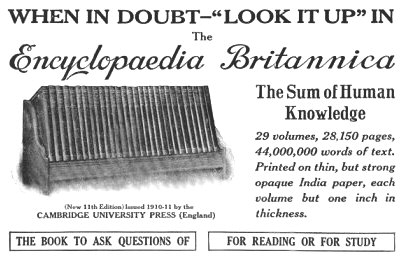
The first report told of the collapse of the leading French Print Encyclopedia Quid, which canceled its annual publication due to lack of advance sales, citing competition from Wikipedia for the shortfall. According to the Independent Newspaper:
The book’s publisher, Robert Laffont, says the whole concept of the print encyclopedia can no longer compete with the free information available on the Internet. Quid, produced by a family team for the past 45 years, has suffered especially at the hands of the French-language version of Wikipedia, the do-it-yourself web encyclopaedia.
Meaning that a legitimate, credible body of work has become the first major conquest in Jimbo Wales’s cultural war.
What Wordbomb Wants
 This week, one of Wikipedia’s most bitter and drawn-out disputes came to a head. The dispute (chronicled in The Register) centers around the assertion by representatives of Overstock.com that financial journalist Gary Weiss had been editing Wikipedia to impose his point of view on a series of articles relevant to the company. Weiss had become notorious around the Internet for his public feud with Overstock and its CEO Patrick Byrne, ridiculing their campaign against the controversial traders’ practice of Naked Short Selling.
In 2006, Judd Bagley, an ally of Overstock’s Patrick Byrne having interviewing the CEO for a personal project, began editing Wikipedia to counter what was perceived to be a skewed representation of Naked Short Selling and Overstock.com. He was swiftly dispatched by influential Wikipedia administrators.
Shortly after, Bagley became Overstock’s Director of Communications, and embarked on an aggressive campaign to publicize the dispute on various websites, aiming to expose the administrators he held responsible for protecting Weiss. Using the moniker “Wordbomb”, Bagley presented evidence suggesting that not only was Gary Weiss editing Wikipedia using the name “User:Mantanmoreland“, but that he was operating other accounts to manipulate consensus and protect his interests in the dispute.
So what if it is broken?
This post was submitted to the Wikipedia Review forum in February 2008 by the Reviewer “Dogbiscuit”:
 Dogbiscuit: Not so long ago, Gomi did a pretty good summary of what was wrong with Wikipedia (enshrined in blogland now). In recent posts, there have been some observations about why this is a problem. I’m sure others can put this in more learned ways, but I would like to set it out in simple terms, for public consumption.
Clearly, the context is that Wikipedia is omnipresent on the Internet, but I thought it would be useful to enumerate why this concerns me, or us. I don’t think it is simply a matter for academic accuracy, but a wider concern about the ability to misinform on a wider scale.
“A starkly one-sided attack on my personal and professional character”
 Last month, The Review reported from the vaults of Wikipedia’s Museum of Defamation, otherwise known as the Biographies of Living Persons Archives. We examined the ease by which character assassinations and misinformation against individuals can be propagated via the power of Wikipedia.
Most of our sample findings from the archives detailed obvious problems eventually resolved after repeated demands for attention from administrators; but many other complaints concern more subtle forms of defamation, not easily identifiable to the average Wikipedian.
In January 2008, the Australian journalist Ed O’Loughlin wrote a long response that appeared in the deletion debate of his Wikipedia biography. In the correspondence, O’Loughlin stated why he was requesting deletion, and why he, like many others, would rather not have his reputation tested by a project as volatile and prone to abuse as Wikipedia.